


“Opening the Door to Self-Sufficiency”
What inspires you? Can you make a difference?
Through our project we found both inspiration and the means for making a difference.
The Project
Our project addresses SDG #1, the eradication of poverty. To contribute to that goal, we partnered with the Center for Creative Ecology, located in Israel, whose mission is: “Empowering individual change-makers and future leaders, to engage in creative action towards environmental sustainability and social justice in order to build healthy communities, organizations and business. Our project bridged the Center for Creative Ecology’s online, hands-on permaculture courses to impoverished communities in Haiti.
Permaculture is a set of design principles centered on whole systems thinking and using patterns and resilient features observed in natural ecosystems. Fields ranging from regenerative agriculture, rewilding, and community resilience are a few of the ways in which permaculture has succeeded in its efforts. The online permaculture course offered by the Center for Creative Ecology provides methods for developing food security by optimizing existing resources and building community capacity.
Our project goal is to co-generate greater self-sufficiency through agriculture with communities on the outskirts of Port au Prince, Haiti. By developing a new partnership our project connects resources in Israel with communities in Haiti, sharing expertise across borders and removing cultural barriers. Successful development projects recognize that culture matters, and the online course will be developed and delivered within the cultural context of the partnering community.
Eradication of Poverty
“Framework for Action”
https://www.un.org/sustainabledevelopment/poverty/
“Fundamentally, poverty is a denial of choices and opportunities, a violation of human dignity. It means lack of basic capacity to participate effectively in society. It means not having enough to feed and cloth[e] a family, not having a school or clinic to go to, not having the land on which to grow one’s food or a job to earn one’s living, not having access to credit. It means insecurity, powerlessness and exclusion of individuals, households and communities. It means susceptibility to violence, and it often implies living in marginal or fragile environments, without access to clean water or sanitation.” —United Nations, 1998
Eradicating poverty requires a multi-faceted approach that addresses a myriad of impacts on vulnerable communities. We are addressing food insecurity and community capacity building. Our goal is to establish permaculture practices that can reduce food insecurity through self-sufficiency rather than dependency. Dependency creates generational poverty. Our project is designed to teach generations how to grow their own food with very limited resources so they can thrive even in the extreme circumstances we are all facing today.
The United Nations has Global Goals for Sustainable Development throughout the world. Goal #1 is eradicating poverty worldwide. The number of people living in extreme poverty declined from 36% in 1990 to 10% in 2015. Now, due to circumstances with the COVID-19 crisis, there is a deceleration in positive changes and there is a risk at hand of a reverse of decades of progress in the fight against poverty. New research published by the UN World Institute for Development Economic Research warns that the economic fallout from the global pandemic could increase global poverty by as much as half a billion people, or 8% of the total human population. This would be the first time that poverty has increased globally in thirty years. It’s devastating to know that more than 700 million people, 10 percent of the world population, still live in extreme poverty today and struggle to fulfil the most basic needs like health, education, and access to water and sanitation.

The Carribean has been identified as one of the most vulnerable areas. These impacts will reverberate across communities; affecting education, human rights and, in the most severe cases, basic food security and nutrition.
https://www.un.org/sustainabledevelopment/poverty/
https://blogs.worldbank.org/opendata/impact-covid-19
The goal of eradicating poverty globally is a powerful goal and lofty one. However, through our partnering NGO, Kibbutz Lotan, there is an evidence-based practice ready to be put in motion. Kibbutz Lotan, located in the Arava Valley, has developed a unique approach to agriculture, tested in the most extreme conditions and shared effectively on a global scale.
Arava Valley in Israel
“The Oasis in the Desert”
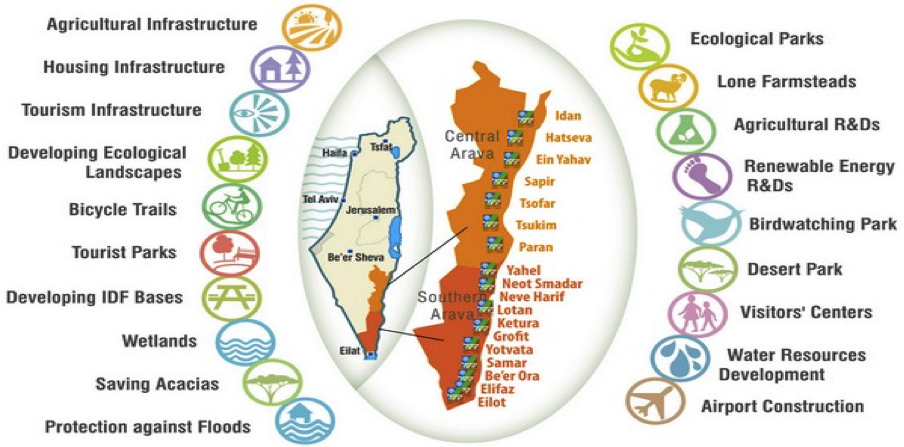
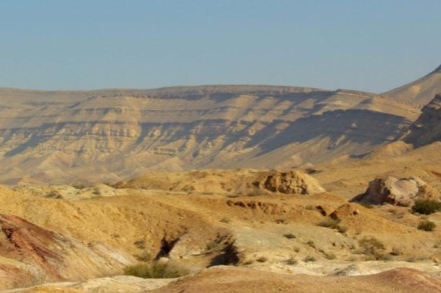
Kibbutz Lotan’s inspirational community is located in southern Israel in the Arava Valley which prides itself on its agriculture. Although the Arava Valley is located in an arid desert and receives approximately an inch of rain annually, Kibbutz Lotan has become a model for agricultural production. Overall, the soil of the Arava desert is rocky and not conducive to agriculture. Yet, they’ve thrived through the use of their progressive agriculture practices. They believe that food is our greatest connection to the Earth. They’ve applied technology to produce food while teaching about community building at the same time. Thanks to research, faith and innovation, Kibbutz Lotan has thrived.
The Arava Valley
Then
Now

Background
In 1983, the young adults who began the Kibbutz Lotan community were 18 and had determination, vision and a true love for community, sustainability and agriculture. They now consist of 30 families including 60 adults and 60 children. “Reducing ecological footprint and environmental impact in the community,” were two of the main goals of the

founders. They put in diligent work on a minimal scale by diving deep into waste management and sustainability. This project was a model adopted by many other communities around the country, for its experiments on production of organic food in the desert, and energy efficiency by constructions. They were the first to produce EDEs or Ecovillage Design Education Courses in the world and have hosted the southern branch of the Arava International Centre for Agriculture Training. They’ve partnered with over ten schools and organizations and their widespread influence is essential to global impact. They’ve also received an award for excellence by the Global Eco-Village Network and are noted as one of the top three places to visit in Israel. Their strawbale Solar Organic Tea House is the 1st grid connected solar restaurant in the country and has no- complaint composting toilets. Their need to turn “problems” into beauty is exceptional. They’ve turned food scraps into compost for vertical tire gardens, compost waste into garden beds by sheet mulching, and mud structures into housing. It is through these educational channels that they aspire to achieve their goal of Tikkun Olam, to repair the world.
http://kibbutzlotan.com/cfce/about-us/?lang=en

Empowering individual change-makers and future leaders, to engage in creative action towards environmental sustainability and social justice in order to build healthy communities, organizations and businesses
Provide world class training, research and demonstration center for capacity building for all age groups in local organic food production, ecological building methods, appropriate technologies, permaculture design and community resilience.

- To instill a sense of wonder for nature and the environment, while developing awareness and knowledge of the global challenges being faced
- Ecological design –
- Water purification –
- Organic gardening –
- Sustainable agriculture –
- Natural building –
- Renewable energy and alternative technologies –
- Building regenerative community roots –
- Permaculture design –
http://kibbutzlotan.com/cfce/about-us/?lang=en#missionstatment
The Center for Creative Ecology (CfCE) developed from a growing desire from Kibbutz Lotan to reduce environmental impacts and to embrace a more sustainable way of life. A world class training force along with a center that focuses on research and demonstration for capacity building in sustainability, their focus is on quality. They provide experiential and practical education in local organic food production, ecological building methods, appropriate technologies, permaculture design and community resilience that serves to inspire, motivate and empower people to build sustainable communities and to take creative action for positive change towards social and environmental justice. As a result of the pandemic they have gravitated to online learning platforms, and this project is at the forefront of delivering that resource internationally.
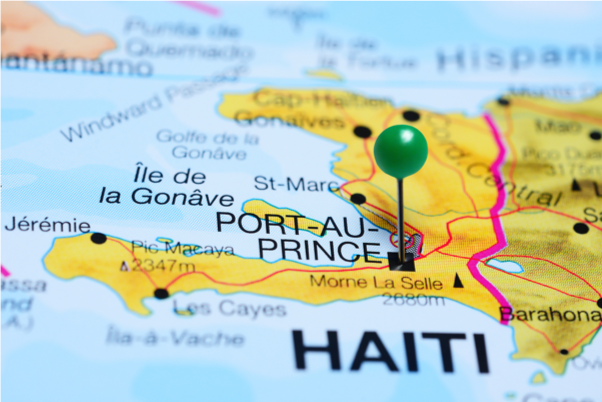
In response to the COVID-19 crisis, their online permaculture course is planned to be distributed to vulnerable Haitian landowners located in rural areas far outside the capital of Port Au-Prince. Our aim is to enhance existing agricultural skills further so that they can be passed down through generations. Along with community members in the under-resourced communities, Kibbutz Lotan is aiming to reach university students and the agricultural sector in Haiti to share expertise in permaculture best-practices that minimize resources and maximize yields. Being able to connect key community members can affect communities exponentially and begin a cycle of self-sufficiency. The pandemic has been devastating to vulnerable populations on a global scale. Our project demonstrates how technologies can bridge communities to share expertise and local wisdom to create positive change.
The Problem
Food Insecurity
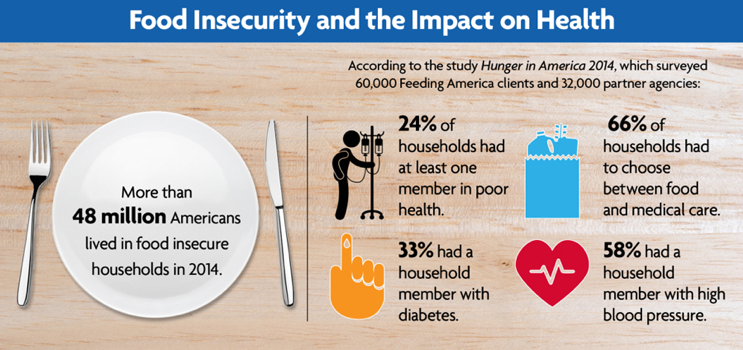
Haiti has one of the highest levels of food insecurity in the world. According to a new Integrated Food Security Phase Classification (IPC) analysis, more than one in three people in Haiti need urgent food assistance. That is nearly 3.7 million people. One of the main drivers of food insecurity is the poor performance of the agriculture sector and the heavy dependence on food imports, which account for more than half of the food and 83 percent of the rice consumed. Haitians are extremely vulnerable to inflation and price volatility in international markets. Consumer prices for major food products are 30 to 77 percent higher than in the Latin America and Caribbean region, making them unaffordable for vulnerable populations. These issues have been exacerbated by a series of natural disasters over the past two decades, including severe storms, flooding, landslides, drought, the devastating earthquake that rocked the country in 2010 and category 4 Hurricane Matthew, which left 806,000 people in need of urgent food assistance in 2016. Now, having to face the Covid-19 crisis, it is even more imperative to identify practices designed to reverse dependency and create opportunities building resiliency.
https://www.wfp.org/countries/haiti
Agriculture in Haiti
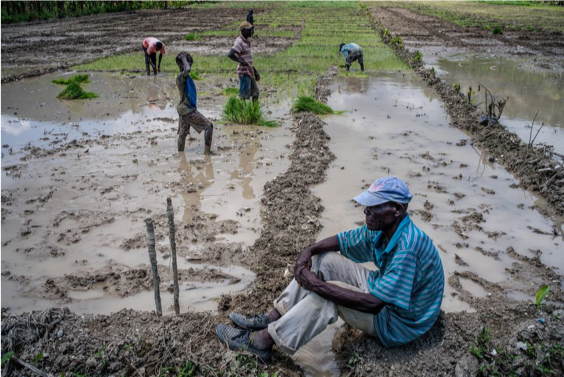
In the past 20 years, Caribbean countries have, each year, spent between 1 and 9% of their GDP dealing with the effects of weather hazards. In addition, changing preferences within the European market have contracted the region’s traditional exports – sugar, bananas, cocoa and rice.
As a consequence, the agriculture sector has been stagnating as farmers and governments have to absorb the costs of weather hazards and price fluctuations. This, in turn, has led to lower rural income levels, increased poverty, and reduced economic growth and competitiveness.
Permaculture and Ecological Design Training Course
“The Key”
Kibbutz Lotan provides an exceptional community where their practical training program in hands-on sustainable engineering, systems design and cooperative living thrive. These principles and practices are directly transferable to our partnering communities in Haiti.
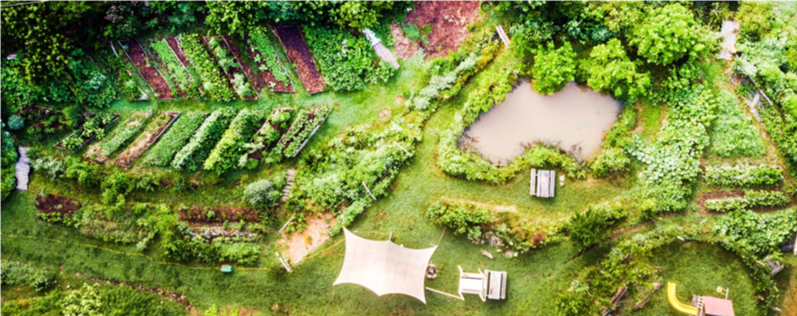
http://kibbutzlotan.com/amutat-tzel-hatamar/?lang=en
Introduction to Permaculture
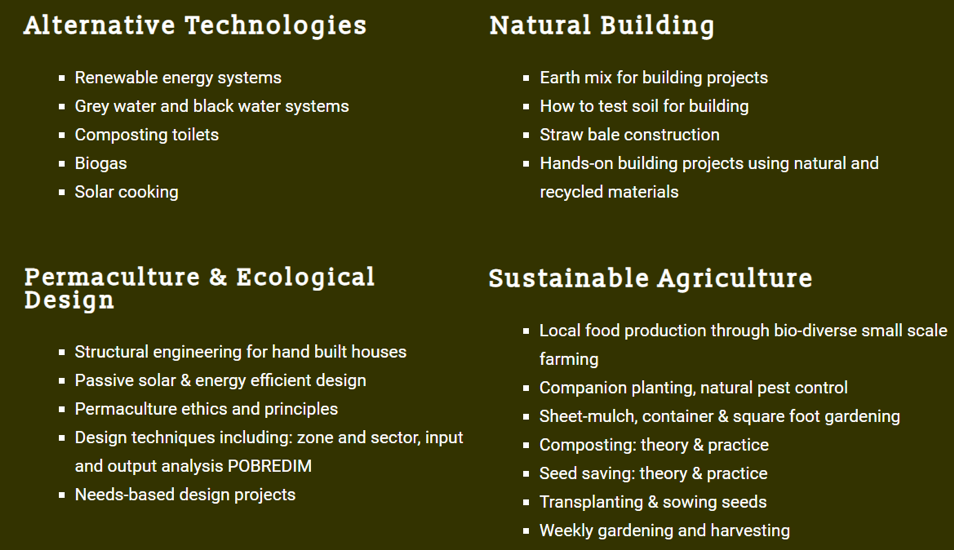
Above are examples of the permaculture course content provided by Kibbutz Lotan. Lessons in simple steps on how to grow healthy vegetables in your own garden, natural ecological construction methods and techniques, demonstration of technologies such as grey-water systems and biogas, are examples of practical tools that can transform communities with limited resources. Through a mix of online live and pre-recorded lessons, both theoretical and practical, the course directly addresses how to meet pressing challenges, such as food security, with hands-on applications. Through a distribution channel of farmers, agriculture students, and community leaders, the online permaculture course will be placed in the hands of those who can benefit the most and share their knowledge with others.
http://kibbutzlotan.com/cfce/green-apprenticeship/
http://kibbutzlotan.com/jnf-kkl/?lang=en
Summary
Kibbutz Lotan has developed a sustainable, agricultural community in the desert of
Arava with the goal of teaching needy communities around the world sustainable techniques so they can use any natural resources they may have to become self-sufficient and create their own means of education, health care and food production. Their story is truly amazing and was remarkable to witness via video, a live virtual interview from one of the founders and through a virtual tour of the community. Our task was to make the realizations of Kibbutz Lotan equally compelling to others, by creating a narrative telling their story and a website featuring its online Permaculture course. My group is also helping to put Kibbutz Lotan’s techniques into action by reaching out to agricultural centers in Haiti to inspire them to take this course in order to, in turn, help those with extreme food insecurity in that country.
Through this course, we have been uplifted by learning how we can partner with people who are actively addressing that goal and making a positive difference. Together we have made connections between those with resources and those who would benefit to make a lasting difference. When asked, “what did you do during the onset of the pandemic” we can say, “we did our part to make things better.”
Each of the students who gratefully participated in this program and project had individual connections with the SDG’s goal of No Global Poverty.
“What drew me to the Poverty SDG was my curiosity about its contents, based on my own experiences. While growing up on my father’s farm, I always thought of my family as “miserably poor” because we barely had enough to wear, eat or proper housing. One of the first things I realized when reading the material was that we were not so badly off. I realized we lived in what is categorized as relative poverty, as opposed to extreme poverty, with access to public health care and education, which helped us to start building a path towards life quality improvement. My mom was a member of a “mother’s club” where she learned the basics of family care including children’s health, nutrition and safety. Reading through the material about permaculture on the Kibbutz Lotan, I realized that we also performed many techniques of sustainability without ever been aware of how much we contributed to the environment. For example, growing organic vegetables and recycling water used in the kitchen as much as we could to keep the vegetable garden watered. This program made me aware of not only how fortunate I was growing up, but also made me conscious of the tools that can be applied to get many out of poverty in a sustainable manner.”
Maria Morais
“Growing up in a third world country, I often saw the impact that poverty could have on a population. Though I grew up privileged, in a country battling extreme poverty I was not immune to the toll that monetary constraints take on a society. I always looked for ways to help alleviate people’s suffering but more often than not it was in vain. I joined the SDG “No Poverty” program in the hopes of finding a way to make a more significant impact or at least gain a deeper understanding of the subject. Coincidentally, I happened to be at a point in my college career that I needed to find an internship to meet my sociology degree requirements.”
Raphael Mevs
“As a kid, I got to witness how extreme poverty was affecting my own home country, Dominican Republic. When I came across this course, I knew I had to take it immediately. Knowing that I could make an impact in others’ lives, especially the people in my home country, pushed me even more to take this course. The knowledge I have attained from this course is imperative to overcome the No Poverty SDG and should be shared with the rest of the world.”
Megan Morillo
“Having a connection with poverty since a young girl, this opportunity fell into my lap for a reason. I also believe that it happened at the right time because my leadership skills are needed even at times when I don’t feel capable of influencing. This pandemic has been extremely hurtful to many and the light we’re shining on others with our work has been so empowering to me. I would always witness poverty and feel helpless even with my small actions of kindness. This program has enlightened me to recognize the power in self-sufficiency and the purpose we each have in our own individual lives to influence others and inspire them to bring out their own power. My own close family members have experienced poverty and received help from others so it’s imperative for me to find ways to help other people too. The help we received was almost as if angels had been sent to assist us in our hopeless times. For this reason and so many others, being innovative and deciding that I can make a difference is what moves me forward in life.”
Andreana Diaz
“I chose to take this class because out of all the courses I have taken in the past, the ones that engage and interest me the most are classes on poverty in the developing world. I have been able to study aspects of poverty such as gendered poverty, environmental poverty, and international organizations that fight poverty. I wanted to take this class to tie in what I have learned and what interests me to a real-life experience.”
Maggie Hewitt
“The reason why I chose the Poverty SDG is because I wanted to explore more about the causes behind poverty as well as do something. I did not want to sit back with my arms crossed and do nothing. As I kept reading about statistics on those affected by poverty, especially during this global pandemic, I knew I wanted to be a small part of the solution. We all have a responsibility and desire to help those in need, and it might seem like our work or efforts go unnoticed, but they go a long way.”
Queixli Ruballos
